

A HISTORY OF THE BRITISH CAVALRY 1816-1919 VOLUME I: 1816-1850
Written by The Marquess Of Anglesey
Published by Leo Cooper
in 1973
ISBN: 0850521122
- Categorised in:
- HISTORY
- HISTORY (BRITISH)
- MILITARY
- ARMY
- CAVALRY
 View more images
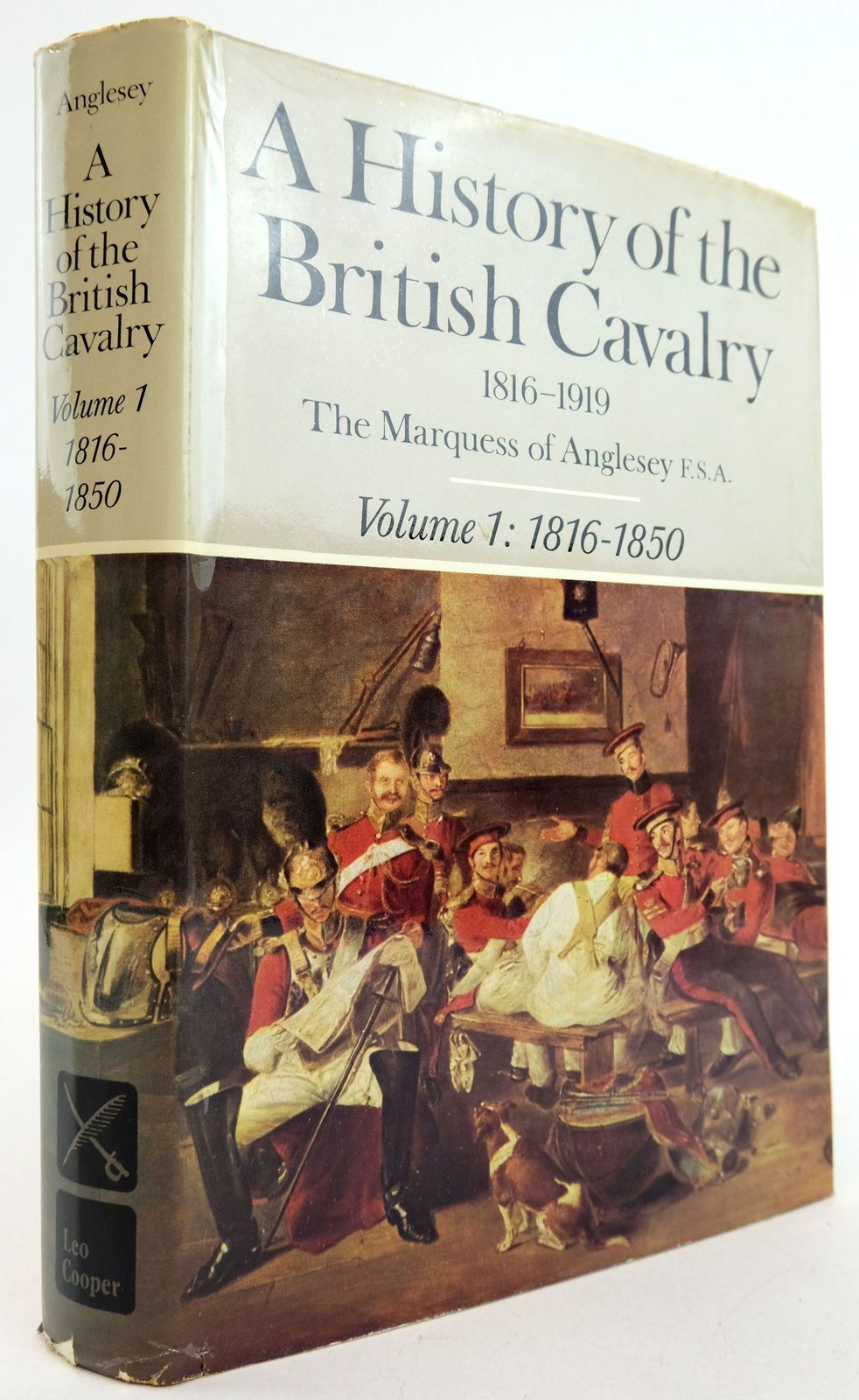
A HISTORY OF THE BRITISH CAVALRY 1816-1919 VOLUME I: 1816-1850
Written by The Marquess Of Anglesey.
Stock no. 1819676
1st.
1973.
Hardback.
Slightly better than very good condition in a very good dustwrapper.
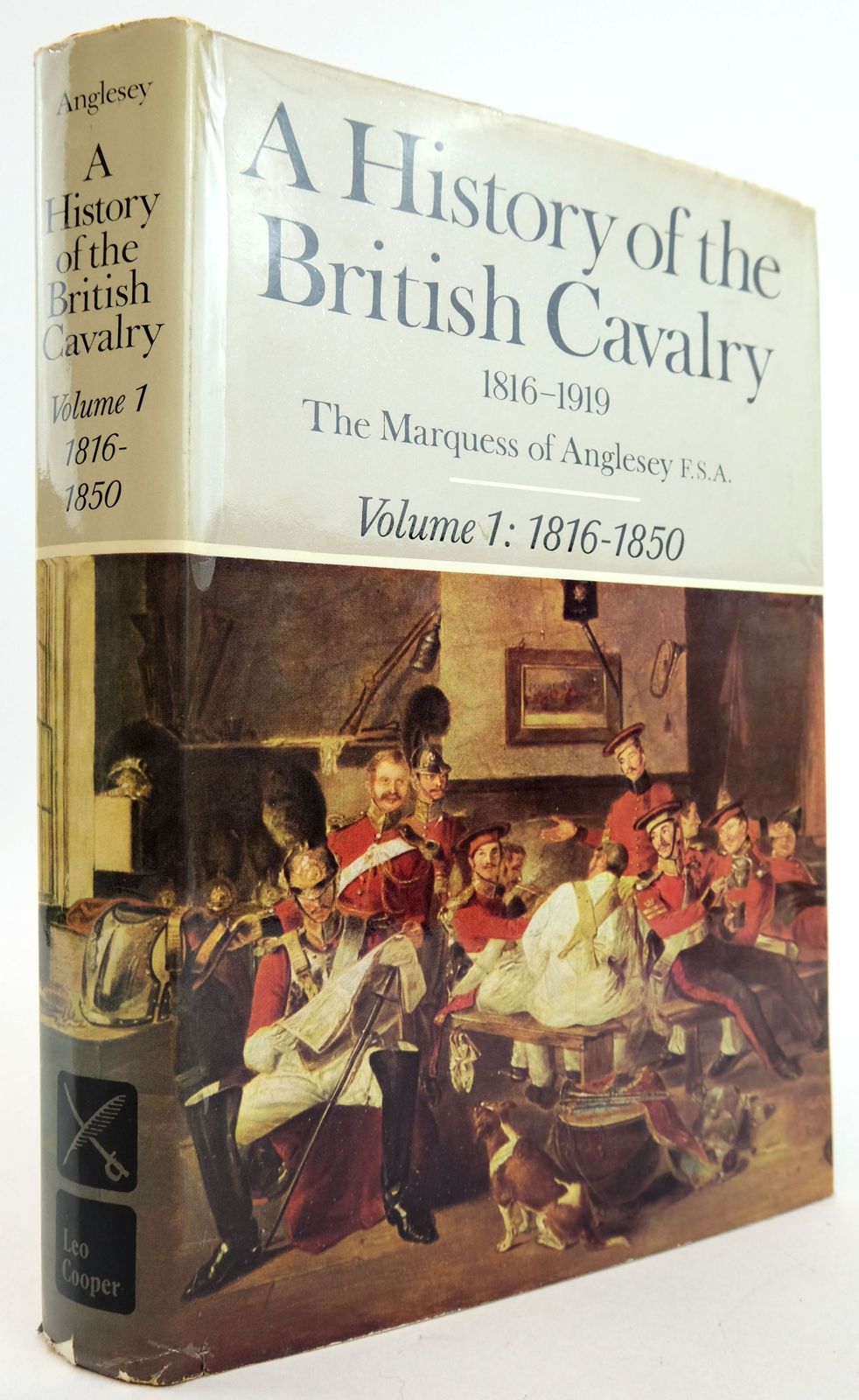
After a prologue in which the origins and early development of mounted warfare are discussed, covers the period from 1815 to 1850. During those years the cavalry were employed in action chiefly in India, which therefore provides the setting for much of this volume. Red cloth boards, gilt title to spine. B/w illustrations. Top edge red. ISBN: 0850521122. SIGNED (no dedication) by the author to title page. Pictorial dustwrapper is lightly browned.
Front cover
Contents
- Acknowledgements
- Preface
- Prologue
- i) Cavalry from the earliest times to the end of the Civil War
- ii) British cavalry from the start of the Standing Army until 1790
- iii) British cavalry in the Revolutionary and Napoleonic Wars, 1793-1814
- iv) The Waterloo campaign, 1815
- v) British cavalry in India up to 1815
- I i) Post-war role of the army at home - reductions greater in infantry than cavalry - alterations in regimental establishments - eight regiments disbanded - constant changes of station
- ii) The yeomanry: constitution and establishments - governments' usual preference for regulars in police work
- iii) Regulars and yeomanry in aid of the civil power - the Jeremiah Brandreth riots - the 'Blanketeers' - skill required to disperse large crowds - the 'massacre of Peterloo' - the Reform Bill riots in Bristol - Chartist riots - billeting difficulties
- II i) 'The Cavalry Spirit' - the difference between heavy and light cavalry - training: the charge, sabre positions - types of swords
- ii) The reintroduction of lancers - types of lance - its value questioned - the lance in India
- iii) The military seat - basic field movements
- iv) Reconnaissance - skirmishing - picquets - vedettes
- v) The Cavalry Depot - Riding Establishments
- vi) Types of horses - remount problems - Government studs in India - stallions, geldings or mares? - the veterinary service - farriers - docking and nicking - shoeing - sore backs - the saddle
- III i) Types and classes of the rank and file - illiteracy
- ii) Rank and file: bounty - free issue
- iii) Rank and file: pay - stoppages - 'clearings' - desection - enlistment for life - limited service - wilful maiming - 'bringers' - taking the shilling
- iv) Rank and file: uniform - unsuitability of clothing
- v) Rank and file: diet - 'tommy' - 'skilly' - cooking utensils - obligatory third meal - the 'who shall'
- vi) Range and file: billeting - barracks: shortage of space, beds and bed clothes, water, lighting, ventilation - wives and children - hospitals
- vii) Rank and file: major punishments: death, imprisonment, flogging - barrack-room courts-martial - 'booting' - minor punishments: 'taps', 'gagging', the black hole
- viii) Rank and file: leisure - daily routine - drunkeness: grog shops, staggered pay days, in India - coffee and reading rooms - venereal disease - recreations - heath - education: regimental schools - good conduct pay and badges - savings banks - pensions - discharge
- ix) Rank and file: the beginnings of reform in living conditions
- IV i) Types and classes of officers - examinations for commissions and promotion - uniforms: premium on wealth - moustaches
- ii) Officers: purchase system, first commissions - free commission - 'gentlemen volunteers' - Royal Military College, Sandhurst - Military Seminary, Addiscombe
- iii) Officers: purchase system, promotions - brevet rank - official tariff - over regulation prices - the evils and supposed advances of the system - condemned by Royal Commission of 1857 - abolition in 1871
- iv) Officers: half-pay - full pay - messing costs - charges - allowances - general's emoluments - pensions
- v) Officers: all socially equal - confidential reports - medical certificates - leisure - drunkenness - crime and punishment - army chaplains - paymasters - quartermasters - riding masters - medical officers
- vi) Officers: duelling - notable duels
- vii) Officers: in the East India Company's armies - difference of status - extra-regimental employment - batta
- V i) India:regular and irregular (silladar) native cavalry regiments
- ii) India: the founders of the silladar cavalry, James Skinner and William Gardener - Gardner's Horse - Skinner's Horse - other irregular regiments
- VI i) India: The Nepal War, 1814 - 1816
- ii) India: the Third Maratha and the Pindari Wars, 1817 - 1819
- iii) India: the Siege of Bhurtpore, 1825 - 1826
- VII i) India: the First Afghan War, I: 1838 - 1840
- ii) India: The First Afghan War II: 1841 - 1842
- VIII i) India: The Conquest of Sind, 1843
- ii) India: The Gwalior campaign: 1843
- IX i) India: The First Sikh War, 1845 - 1846
- ii) India: The Second Sikh War, 1848 - 1849
- Epilogue
- Appendix
- Source Notes
- Index