Beeswax - Part Two - The Chemistry and Uses of Beeswax
(This is the second part of our Beeswax mini series contributed by Bernice. Part one is here.)
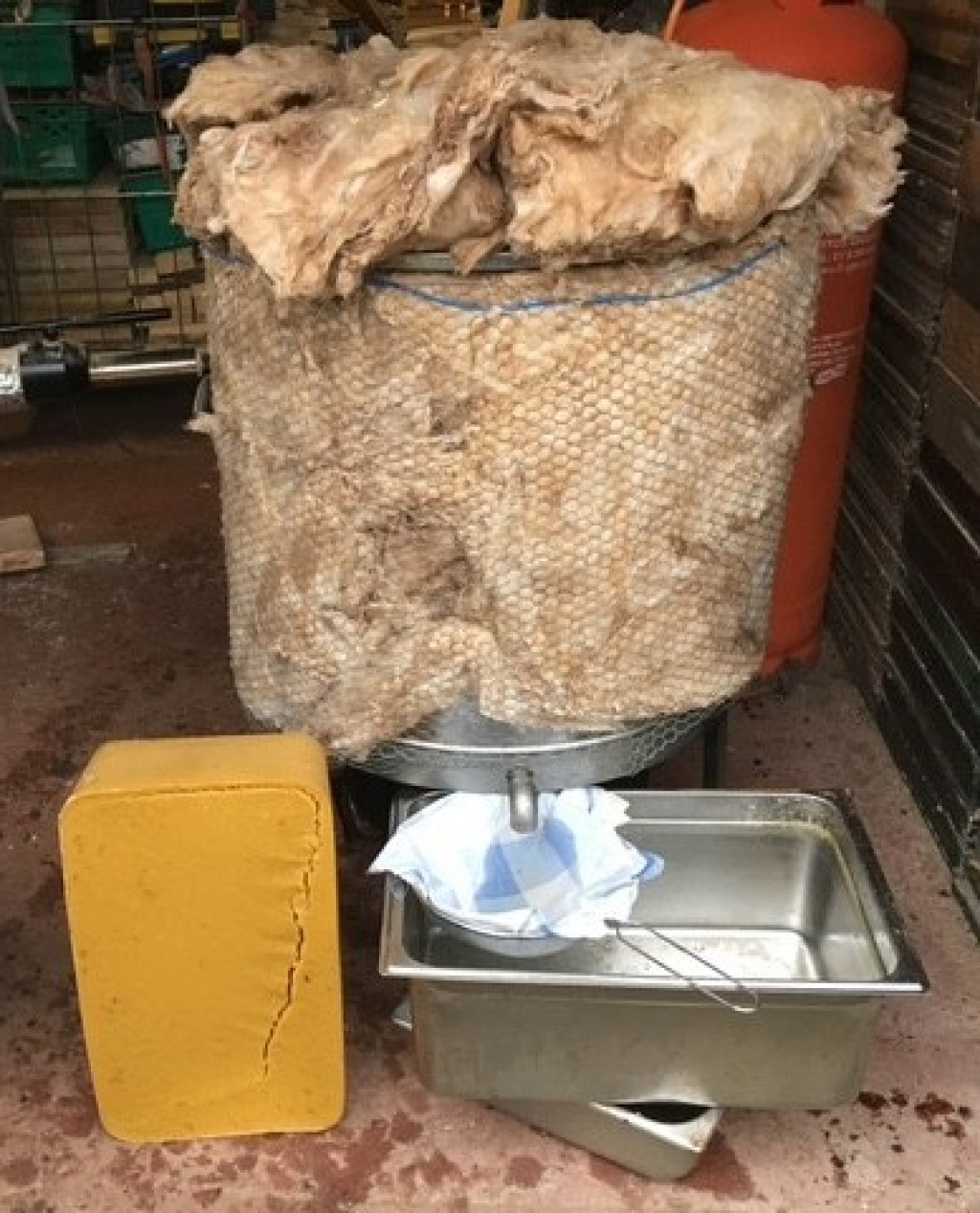
I joined the family bee business about 9 years ago, although I had been helping out for a long time before that. There are many aspects to the job and dealing with the surplus beeswax from the honey extracting is one of them. The filtering, cleaning and re-milling of the wax to go back into the hives I find enjoyable and very satisfying. The wax is a valuable part of the harvest for both beekeepers and the bees. We depend on the bees and they depend on the wax.
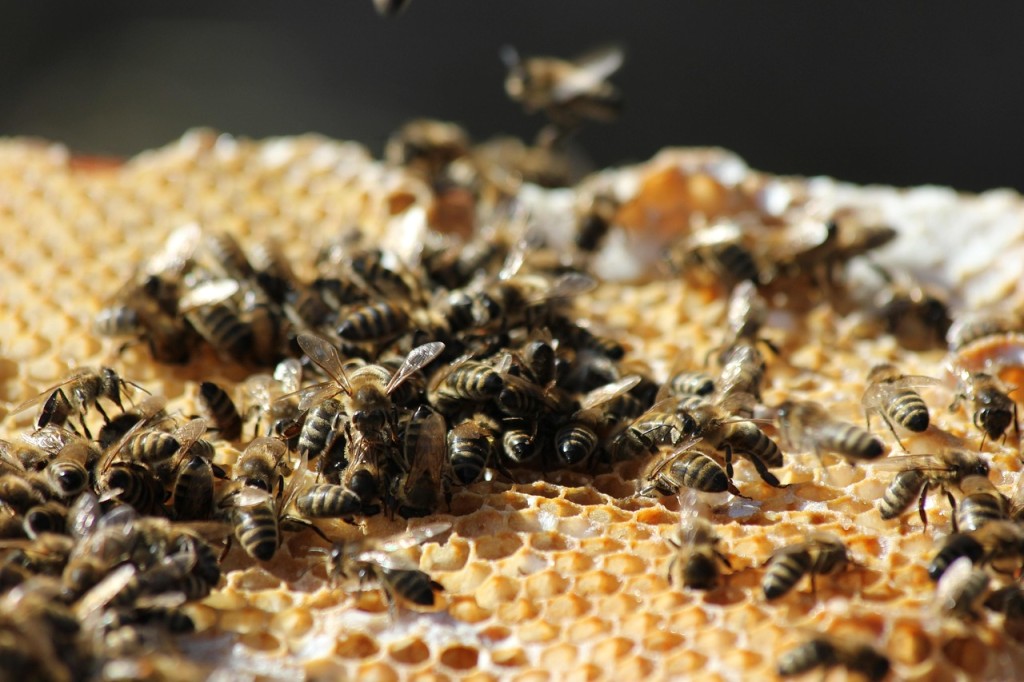
The primary chemical components of beeswax are esters, fatty acids, and hydrocarbons. Beeswax esters are unique to beeswax and give it its characteristic properties. They are formed through the reaction between the fatty acids secreted by the wax glands and long-chain alcohols produced by bees. This chemical composition is what sets beeswax apart from other waxes and results in several distinct properties, such as its malleability, water-repellent nature, and its ability to remain solid at a wide range of temperatures. This makes it ideal material for a huge range of applications.
Beeswax is unique because:
- It is more chemically complex than other waxes
- Unlike many synthetic waxes and some plant-based waxes, beeswax is entirely natural. It is produced by bees as part of their hive-building and food storage processes.
- It is a sustainable resource when harvested responsibly from healthy bee colonies. Beeswax production supports the vital role of the pollinating insects in our ecosystem
- Beeswax is recovered as a by-product when honey is harvested.
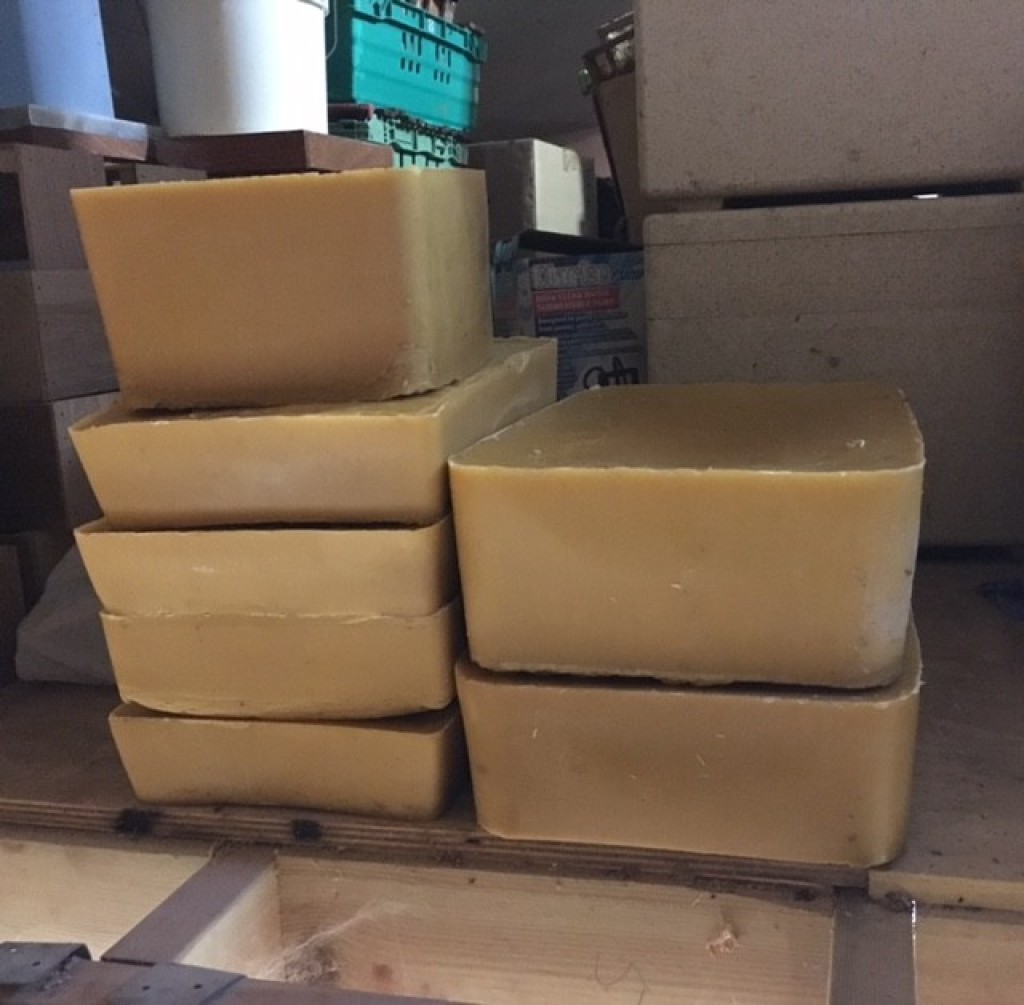
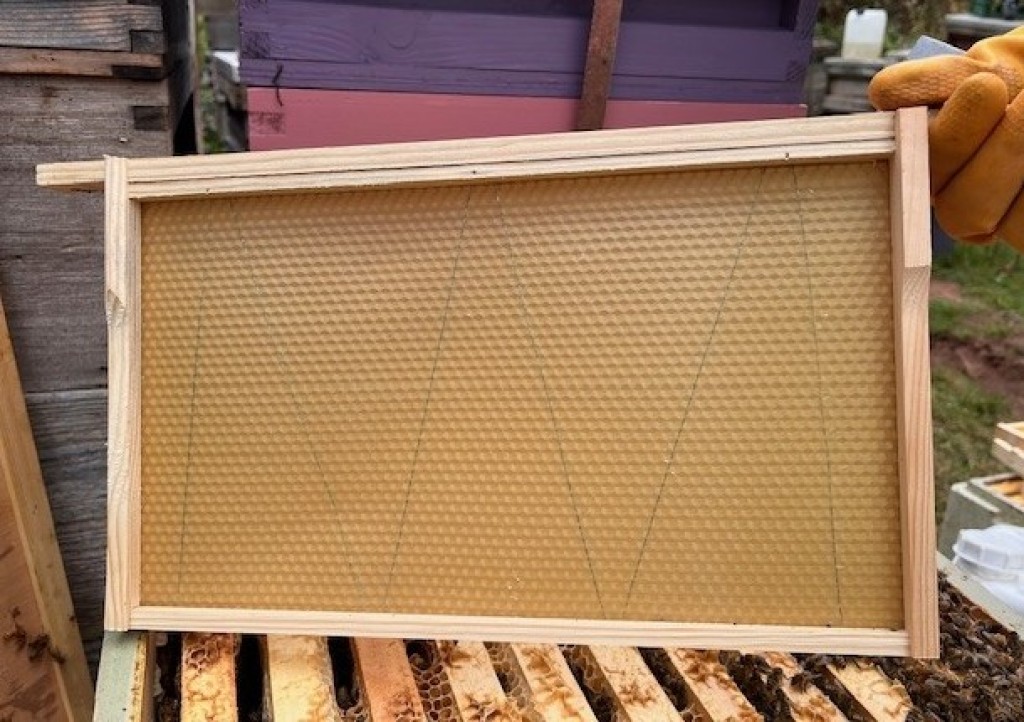
Wax foundation is one of the most important uses of beeswax. Modern methods use wax sheets stamped with the hexagon imprint of cell bases which the bees use as a template to draw out the comb as described above.
About 25% of all beeswax is recycled back into hives as foundation. To make sheets of foundation, melted wax is poured into a mould which is cooled with cold water or on a large-scale using steel rollers cooled with jets of cold water and a tank of melted beeswax. This produces a long sheet which is then cut to size.
The Uses of Beeswax
The uses of beeswax are numerous and diverse. There appear to be five main fields of use with cosmetics being the most important, followed by church candles, wax foundation for beekeepers and the pharmaceutical industry.
Beeswax is used in cosmetics such as lip balms, lipsticks, lotions and creams, and foundations and mascaras, as well as body butters, salves, and even some nail polishes. Its benefits include creating a protective barrier to retain moisture, adding texture and stability to products, and providing moisturizing and anti-aging properties.
It is also used in many general products such as aftershave, after sun, antiperspirant, furniture polish, confectionary, dies for impression of coins and medals, dubbin for leather, electrical insulation, lost wax process for intricate metal castings, lubrication of dies and formers for tube and extrusion presses, and waxed sandwich wraps to name a few. I always remember my grandmother telling me to use beeswax on the iron if it starts to stick and to rub beeswax on the runners of a chest with stiff drawers and it does work! Beeswax is also used to seal and stiffen the thread used in hand stitching leather tack for horses.
The use in pharmaceuticals covers a wide field, but is mainly used in ointments, coating pills and in manufacturing processes.
Candles are still very popular today, but most are made using waxes such as paraffin, soy and coconut oils as these are cheaper alternatives to beeswax. There are a variety of methods from dipping to using moulds which come in many different shapes such as pillar candles to bears and angels. The moulds are also made of different materials such as silicone and glass They can be left as the natural colour of beeswax, decorated with paint and glitter or added fragrance oils. It can be messy but also an enjoyable pastime and is worthy of an article on its own!
On a final note, the word ‘Sincere’, comes from the Latin ‘sine cere’ meaning ‘without wax’. The reference was to unscrupulous sculptors in ancient Roman times who used bleached beeswax to repair marble statues. Perhaps it was only after the statue had been paid for and possibly stood in the hot sun that the repair work was noticed! So, a statue guaranteed ‘sin cere’ came to be an example of honest good faith, and in time was applied to all dealings, and to people who could be trusted.
Gleanings from: Beeswax by Ron Brown and https://www.poth-hille.co.uk.
Contributed by Bernice
(Published on 1st Oct 2025)