Stella and Rose's Books Logo

Stella & Rose's Books

Specialists in Rare & Collectable Books

  Basket is empty
  Login Register

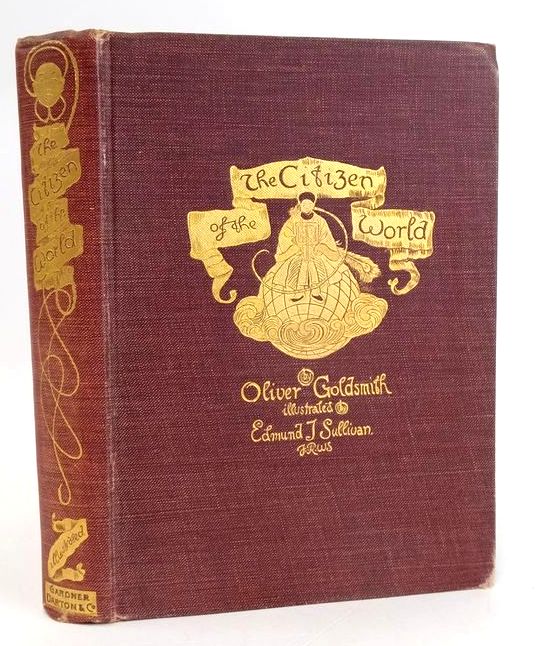
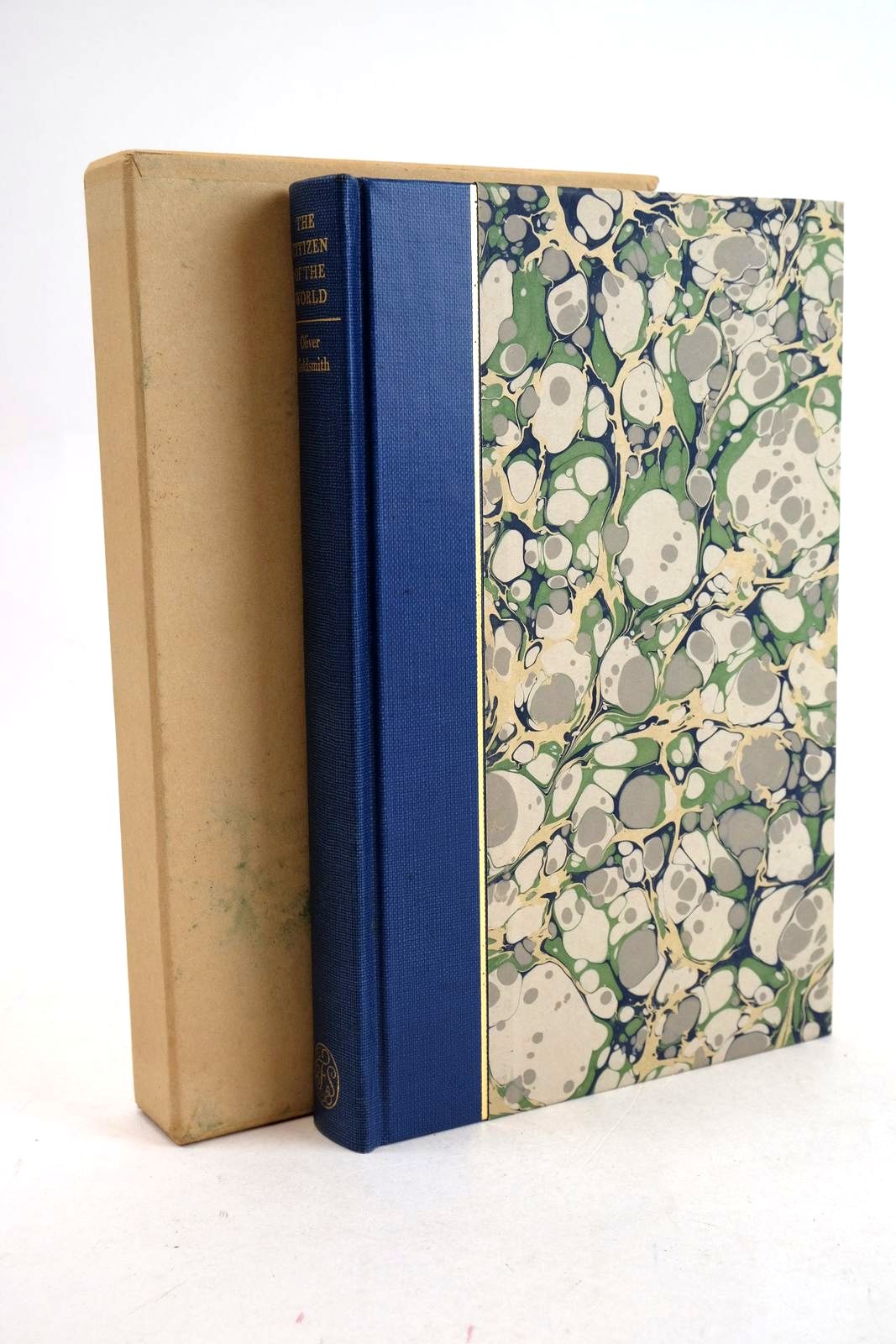
THE CITIZEN OF THE WORLD

by Oliver Goldsmith

Illustrated by Cecil Keeling

Published by Folio Society. 1st. 1969

Very good condition. Letters from a Chinese Philosopher residing in London to his friends in the East. Blue cloth spine with gilt title. Marble effect boards. Small b/w decorations to text. 349 numbered cream pages.

Minimal foxing to textblock and minimal rubbing to spine and corners. Slight musty smell to contents. Contained in original publisher's slipcase which is slightly stained.

Stock no. 1330752

Enquire about this book Add to Wish List

Contents

  • I. Introduction. A character of the Chines Philosopher
  • II. The arrival of the Chines in London. His motives for the journey. Some description of the streets and houses
  • III. The description of London continued. The luxury of the English. Its benefits. The fine gentleman. The fine lady
  • IV. English pride. Liberty. An instance of both. News papers. Politeness
  • V. English passion for politics. A specimen of a news paper. characteristic of the manners of different countries
  • VI. Happiness lost, by seeking after refinement. The Chines philosopher's disgraces
  • VII. The tye of wisdom, only to make us happy. The benefits of travelling upon the morals of a philosopher
  • VIII. The Chinese deceived by a prostitute, in the streets of London
  • IX. The licentiousness of the English, with regard to women. A character of a woman's man
  • X. The journey of the Chinese from Pekin to Moscow. The customs of the Daures
  • XI. The benefits of luxury, in making a people more wise and happy
  • XII. The funeral solemnities of the English. Their passion for flattering epitaphs
  • XIII. An account of Westminster Abbey
  • XIV. The reception of the Chines from a lady of distinction
  • XV. Against cruelty to animals' story from the Zendevest of Zoroaster
  • XVI. Of falsehood propagated by books seemingly sincere
  • XVII. Of the war now carried on between France and England, with its frivolous motives
  • XVIII. The story of the Chines matron
  • XIX. The English method of treating women caught in adultery. The Russian method
  • XX. Some account of the republic of letters in England
  • XXI. The Chines goes to see a play
  • XXII. The Chinese philosopher's Son made a slave in Persia
  • XXIII. The English subscription in favour of the French prisoners commended
  • XXIV. The venders of quack medicines and nostrums, ridiculed
  • XXV. The natural rise and decline of kingdoms, exemplified int he history of the kingdom of Lao
  • XXVI. The character of the man in black; with some instances of his inconsistent conduct
  • XXVII. The history of the man in black
  • XXVIII. On the great number of old maids and Batchelors in London. Some of he causes
  • XXIX. A description of a club of authors
  • XXX. The proceedings of the club of authors
  • XXXI. The Perfection of the Chines, in the art of Gardening. The description of a Chines garden
  • XXXII. Of the degeneracy of some of the English nobility. A Mushroom feast among the Tartars
  • XXXIII. The manner of writing among the Chines. The eastern tales of Magazines, &c. ridiculed
  • XXXIV. Of the present ridiculous passion of the nobility for painting
  • XXXV. The Philosopher's son describes a lady, his fellow captive
  • XXXVI. A continuance of his correspondence. The beautiful captive consents to marry her lord
  • XXXVII. The correspondence still continued. He begins to be disgusted in the pursuit of his wisdom. An allegory, to prove its futility
  • XXXVIII. The Chines philosopher praises the justice of a late sentence, and instances the injustice of the king of France, in the case of the prince of Charolais
  • XXXIX. The description of true politeness. Two letters of different countries, by ladies falsely thought polite at home
  • XL. The English still have poets , who' not versifiers
  • XLI. The behaviour of the congregation in St Paul's church at prayers
  • XLII. The History of China more replete with great actions, than that of Europe
  • XLIII. An apostrophe on the supposed death of Voltaire
  • XLIV. Wisdom and precept may lessen our miseries; but can never encrease our positive satisfactions
  • XLV. The ardour of the people of London, in running after sights and monsters
  • XLVI. A dream
  • XLVII. Misery best relieved by dissipation
  • XLVIII. The absurdity of persons in high station pursuing employments beneath them, exemplified in a fairy tale
  • XLIX. The fairy tale continued
  • L. An attempt to define what is meant by English liberty
  • LI. A Bookseller's visit to the Chines
  • LII. The impossibility of distinguishing men in England, by their dress. Two instances of this
  • LIII. The absurd taste for obscene and pert novels, such as Tristram Shandy, ridiculed
  • LIV. The character of an important trifler
  • LV. His character continued: With that of his wife, his house, and furniture
  • LVI. Some thoughts on the present situation of affairs, in the different countries of Europe
  • LVII. The difficulty of rising in literary reputation, without intrigue or riches
  • LVIII. A Visitation dinner described
  • LIX. The Chinese philosopher's son escapes with the beautiful captive from slavery
  • LX. The history of the beautiful captive
  • LXI. Proper lessons to youth entering the world; with fables suited to the occasion
  • LXII. An authentic history of Catharina Alexowna, wife of Peter the Great
  • LXIII. The rise for the decline of literature, not dependant on man, but resulting from the vicissitudes of nature
  • LXIV. The great exchange happiness for shew. Their folly in this respect of use to society
  • LXV. The history of a philosophic Cobbler
  • LXVI. The difference between love and gratitude
  • LXVII. The folly of attempting to learn wisdom by being recluse
  • LXVIII. Quacks ridiculed. Some particularly mentioned
  • LXIX. The fear of mad dogs ridiculed
  • LXX. Fortune proved not to be blind. The story of the avaricious miller
  • LXXI. The shabby beau, the man in black , the Chinese philosopher, &c. at Vaux-hall
  • LXXII. The marriage act censured
  • LXXIII. Life endear'd by age
  • LXXIV. The description of the little great man
  • LXXV. The necessity of amusing each other with new books, insisted upon
  • LXXVI. The preference of grace to beauty: An allegory
  • LXXVII. The behaviour of a shop keeper and his journeyman
  • LXXVIII. The French ridiculed after their own manner
  • LXXIX. The preparations of both theatres for a winter campaign
  • LXXX. The evil tendency of encreasing penal laws, or enforcing even those already in being, with rigour
  • LXXXI. The ladies trains ridiculed
  • LXXXII. The sciences useful in a populous state, prejudicial in a barbarous one
  • LXXXIII. Some cautions on life, taken from a modern philosopher of China
  • LXXXIV. The anecdotes of several poets, who lived and died in circumstances of wretchedness
  • LXXXV. The trifling squabbles of stage players ridiculed
  • LXXXVI. The races of New-market ridiculed. The description of a cart race
  • LXXXVII. The folly of the Western parts of Europe, in employing the Russians to fight their battles
  • LXXXIII. The ladies advised to get husbands, A story to this purpose
  • LXXXIX. The folly of remoted or useless disquisitions among the learned
  • XC. The English subject to the spleen
  • XCI. The influence of climate and soil upon the tempers and deposition of the English
  • XCII. The manner in which some philosophers make artificial misery
  • XCIII. The fondness of some, to admire the writings of lords, &c.
  • XCIV. The philosopher's son is again separated from his beautiful= companion
  • XCV. The father consoles him upon this occasion
  • XCVI. The condolence and congratulation upon the death of the late king ridiculed. English mourning described
  • XCVII. Almost every subject of literature, has been already exhausted
  • XCVIII. A description of the courts of justice, in Westminster Hall
  • XCIX. A visit from the little Beau. The indulgence with which the fair sex are treated in several parts of Asia
  • C. A life of independence praised
  • CI. That people must be contented to be guided by those, whom, they have appointed to govern. A story to this effect
  • CII. The passion for gaming among ladies, ridiculed
  • CIII. The Chines Philosopher begins to think of quitting England
  • CIV. The arts some make use of to app-ear learned
  • CV. The intended coronation described
  • CVI. Funeral elegies written upon the great, ridiculed. A specimen of one
  • CVII. The English too fond of believing every report, without examination. A story of an incendiary to the purpose
  • CVIII. The utility and entertainment which might result from a journey into the East
  • CIX. The Chinese philosopher attempts to find out famous men
  • CX. Some projects for introducing Asiatic employments into the courts of England
  • CXI. On the different sects in England, particularly methodism
  • CXII. An election described
  • CXIII. A literary contest, of great importance. In which both sides fight by epigram
  • CXIV. Against the marriage act. A Fable
  • CXV. On the danger of having too high an opinion of human nature
  • CXVI. Whether love be a natural or a fictitious passion
  • CXVII. A city night-piece
  • CXVIII. On the meanness of the Dutch, at the court of Japan
  • CXIX. On the distress of the poor, exemplified in the life of a private centinel
  • CXX. On the absurdity of some late English titles
  • CXXI. The irresolution of the English accounted for
  • CXXII. The manner of travellers in their usual relations, ridiculed
  • CXXIII. The Conclusion

Similar Stock